
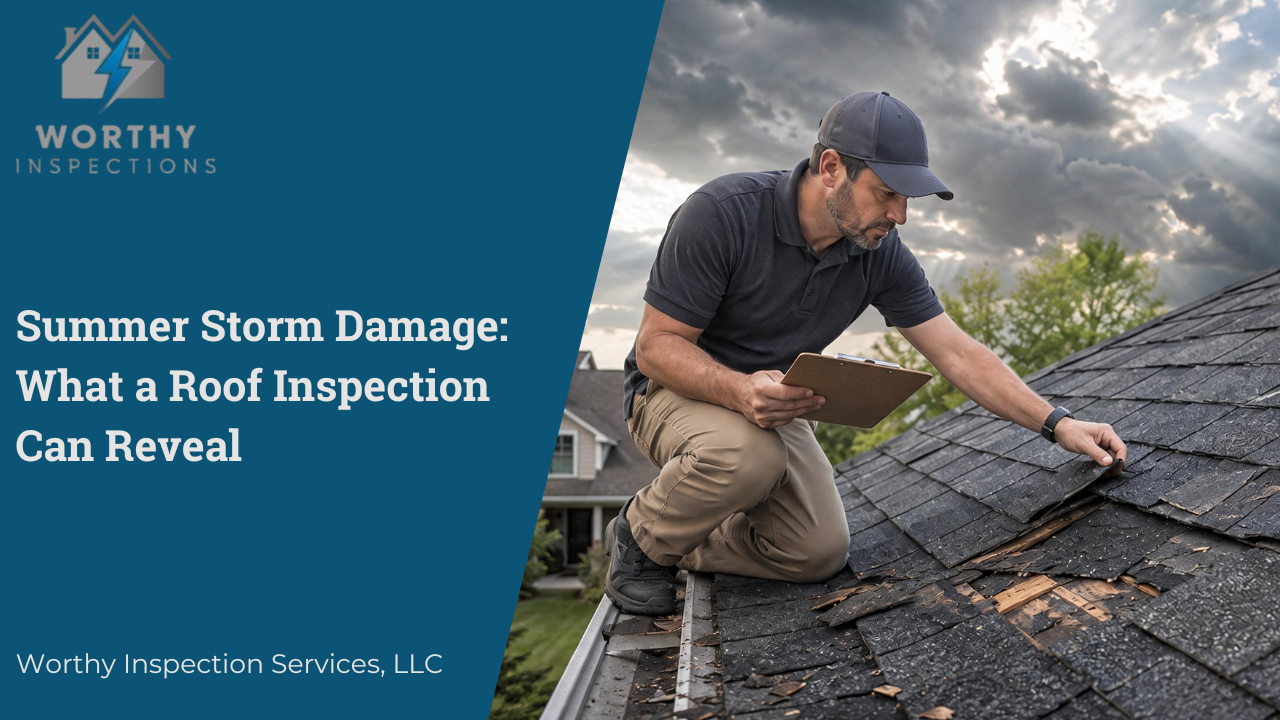
Summer storms often bring heavy rain, high winds, hail, and falling branches that can take a toll on your home's exterior. While some damage is easy to spot, other problems may remain hidden long after the storm has passed. Over time, these unnoticed issues can affect your roof's ability to protect your home and lead to more extensive repairs.
Including a roof inspection as part of your summer home maintenance routine can help identify storm-related concerns before they worsen. By detecting damage early, homeowners can make informed decisions about repairs and help preserve the long-term condition of their property.
How Summer Storms Can Affect Your Roof
Even a brief summer storm can expose your roof to conditions that contribute to wear and damage.
Some of the most common types of storm damage include:
- Wind lifting or tearing shingles and damaging flashing
- Hail leaving dents, cracks, or causing granule loss on shingles
- Heavy rain allowing moisture to enter vulnerable areas
- Fallen tree branches or flying debris damaging roofing materials
While severe weather is often associated with significant roof damage, even moderate storms can create small issues that are difficult to detect without a closer evaluation. These minor concerns may gradually worsen if left unaddressed.
Signs of Storm Damage Homeowners Should Watch For
After a storm, it's helpful to perform a visual check around your property for signs that your roof may need attention.
Watch for:
- Missing, cracked, or lifted shingles
- Water stains on ceilings or interior walls
- Loose or damaged gutters and downspouts
- Branches or debris resting on the roof
- Granules collecting in gutters
- Sagging or visibly damaged sections of the roof
While these signs may indicate potential problems, not every issue is visible from the ground. Attempting to climb onto the roof also presents safety risks, making a professional roof inspection a safer and more reliable option.
Why Roof Damage Isn't Always Obvious
Not all storm damage results in immediate leaks or visible structural problems. Water can sometimes penetrate beneath roofing materials without showing obvious signs inside the home.
Hidden moisture may slowly damage roof decking, insulation, or other structural components before becoming noticeable. Similarly, small cracks in shingles or damaged flashing may not cause immediate issues but can allow water intrusion over time.
Because these problems often develop gradually, scheduling an inspection after severe weather can help identify concerns before they become more costly repairs.
What a Roof Inspection Can Reveal After a Storm
A professional roof inspection provides a closer evaluation of the roofing system and can reveal issues that may otherwise go unnoticed.
An inspection may identify:
- Visible damage to shingles and other roofing materials
- Compromised flashing around vents, chimneys, and skylights
- Early signs of roof leaks
- Areas where water may be penetrating the roofing system
- Damage that could shorten the roof's expected lifespan
- Maintenance concerns that may worsen over time if left unaddressed
Understanding the roof's condition allows homeowners to address problems early and maintain the home's ability to withstand future weather events.
The Connection Between Roof Inspections and Exterior Inspections
While the roof is one of the most vulnerable areas during a storm, it is only one part of the home's exterior that may be affected.
A comprehensive exterior inspection evaluates additional components such as gutters, siding, soffits, fascia, and drainage systems. Since these systems work together to protect the home from water intrusion, damage to one area can affect another.
For example, clogged gutters may allow water to overflow onto siding or the foundation, while damaged flashing may contribute to moisture around exterior walls. Evaluating the home's exterior as a whole provides a better understanding of the overall impact of severe weather.
Roof Inspections: An Important Part of Summer Home Maintenance
Routine summer home maintenance helps homeowners prepare their property for seasonal weather while reducing the likelihood of unexpected repairs.
Including a roof inspection in your maintenance routine offers several benefits:
- Prevents small problems from becoming larger repairs
- Supports the roof's ability to protect against future storms
- Helps maintain long-term roof performance
- Keeps homeowners ahead of seasonal maintenance needs
- Protects the home's overall condition and value
Taking a proactive approach can help extend the life of roofing materials while improving peace of mind throughout the summer months.
When Should You Schedule a Roof Inspection?
Scheduling a roof inspection is recommended:
- After storms involving high winds, hail, or heavy rainfall
- When visible signs of damage are present
- As part of annual summer home maintenance
- Before minor concerns have an opportunity to worsen
Early evaluation helps homeowners better understand the condition of their roof and determine whether maintenance or repairs may be needed.
Protect Your Home Before Small Problems Grow
Summer storms can leave behind both visible and hidden storm damage that affects your roof and the rest of your home's exterior. A professional roof inspection can help identify potential concerns early, support timely repairs, and reduce the risk of more extensive damage over time, making it an important part of protecting your home throughout the summer season.
Before the next storm has a chance to expose hidden roofing issues, schedule an inspection with Worthy Inspection Services, LLC and gain confidence with a thorough evaluation that helps safeguard your roof, your home's exterior, and your investment.
FAQs
1. How can I tell if my roof has storm damage?
Look for missing shingles, granules in gutters, water stains indoors, damaged flashing, or debris on the roof. Some damage may not be visible without a professional inspection.
2. Should I schedule a roof inspection after every major storm?
Yes. An inspection after severe storms can help identify hidden damage before it develops into more costly repairs.
3. Can a roof have storm damage even if there are no leaks?
Yes. Damage to shingles, flashing, or underlying roofing materials may not cause immediate leaks but can lead to future problems if left unaddressed.
4. What does a roof inspection include after a storm?
A roof inspection evaluates visible roofing materials, flashing, signs of water intrusion, and other areas that may have been affected by severe weather.
5. How often should roofs be inspected as part of home maintenance?
Most homeowners should schedule a roof inspection at least once a year and after significant storm events as part of their regular home maintenance routine.

Be the first to post a comment