A home can be freshly painted, well-landscaped, and free of any obvious air-quality complaints, and still have elevated radon levels. Radon has no color, no odor, and no taste, so nothing about how a home looks or feels reveals what's actually in the air. The only reliable way to know is radon testing for homes, a straightforward process that measures the actual radon concentration.
This matters as much for current homeowners as it does for buyers evaluating a new property, since radon exposure is a long-term consideration and testing is the tool that turns an unknown into an actual number.
What Is Radon and How Does It Get Into a Home?
Radon is a naturally occurring radioactive gas produced when uranium in soil and rock breaks down over time. It exists in the ground almost everywhere in small amounts. Problems begin when radon moves from the soil into an enclosed structure and builds up. Radon commonly enters through:
- Cracks in the foundation
- Gaps around pipes and utility penetrations
- Construction joints
- Crawl spaces
- Other openings where the structure meets the ground
An elevated reading does not mean a home is poorly maintained. Radon movement depends on the soil and geology beneath a property, not on workmanship above ground.
Why a Home Can "Seem Fine" and Still Have Radon
Radon does not stain walls, create odors, or trigger symptoms the way mold or excess moisture sometimes do, so there is no visible cue that would prompt a homeowner to investigate. A newly built or carefully maintained home is not automatically protected, since construction quality does not override the soil conditions beneath the foundation.
Two similar homes on the same street can post very different results, because foundation type, ventilation, and how the ground settles all vary property to property. This is why residential radon testing cannot be replaced by assumptions about a home's age, condition, or appearance. Testing is the only way to see what is otherwise invisible.
Why Radon Exposure Matters
Long-term radon exposure is a recognized health concern rather than a hazard tied to any single reading. According to the EPA, radon is the second leading cause of lung cancer in the United States and the leading cause among people who have never smoked. Risk depends on both radon concentration and duration of exposure. Smoking is an important additional factor, since the EPA estimates that radon exposure significantly increases lung cancer risk for smokers compared with nonsmokers. This is a reason to understand exposure over time, not a reason for alarm over one result.
When Should You Consider Residential Radon Testing?
When Buying a Home
A general home inspection does not report radon concentration unless radon testing is performed separately. An attractive or recently updated property tells buyers nothing about what's happening below the foundation, so testing during the buying process provides information worth factoring into the decision.
After Moving Into a Home
If a radon test wasn't completed during the purchase, it's still worth doing afterward. Knowing the home's current level establishes a baseline homeowners can use to make informed decisions going forward.
After Certain Home Changes
Significant renovations involving the foundation, ventilation, or lower levels of a home can potentially affect how radon moves through the structure. This doesn't mean every renovation raises radon levels, but a project of that scope is a reasonable prompt to retest.
If It Has Been a Long Time Since the Last Test
Radon levels are not fixed and can shift over time as soil conditions and seasons change. A result from several years ago shouldn't be treated as permanent, and the EPA recommends periodic retesting.
What Happens During a Professional Radon Test?
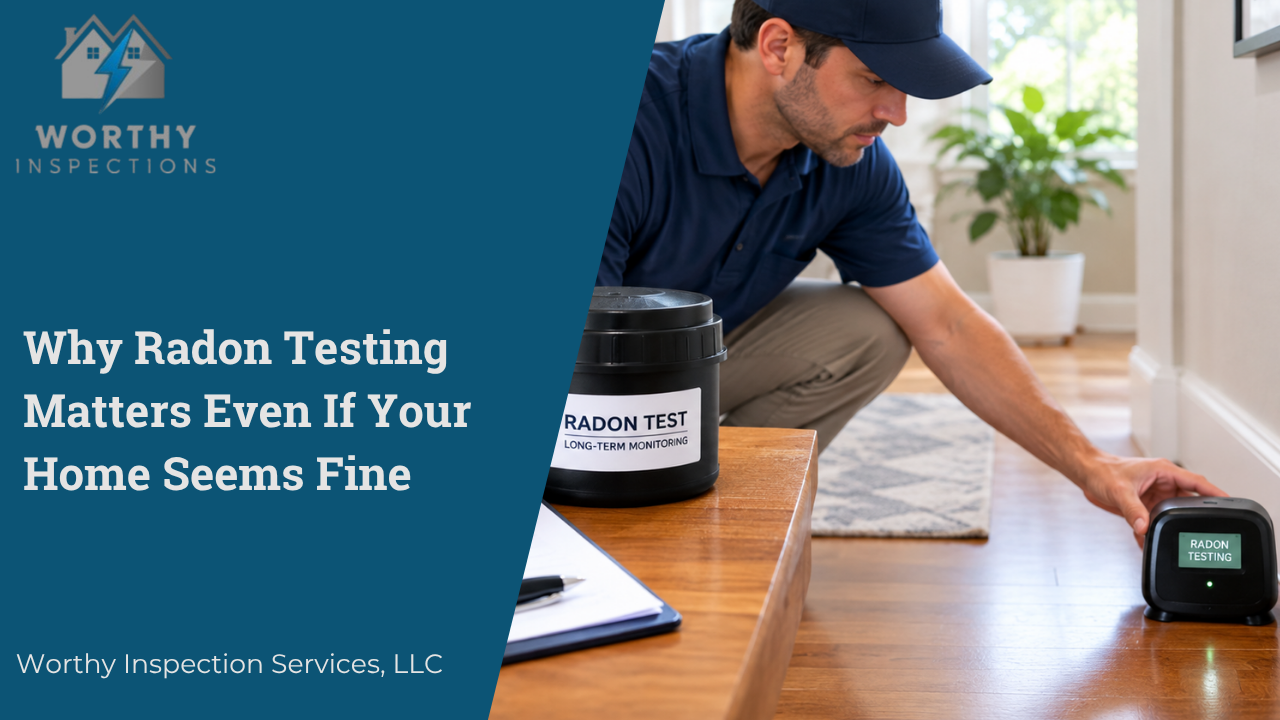
A testing device is placed in an appropriate area of the home, typically the lowest livable level, according to established testing protocols, where it measures radon concentration over a defined period. Proper placement and stable conditions during testing matter for getting a meaningful result. Once complete, the readings are compiled into measurements homeowners can compare against current EPA guidance. For a closer look at what this process involves, see our earlier post on how radon gas testing works.
What Do Radon Test Results Actually Mean?
Radon results are typically reported in picocuries per liter, or pCi/L. The EPA's action level is 4 pCi/L, the point at which mitigation is recommended, though levels between 2 and 4 pCi/L are also worth addressing since risk decreases gradually rather than stopping at one exact cutoff. This is part of why professional interpretation of results is useful. It helps homeowners understand not just the number, but what it reasonably calls for next.
What Happens If Elevated Radon Is Found?
An elevated reading doesn't mean a home is unsafe to live in as is. Radon levels can typically be reduced through established mitigation methods, most commonly a venting system installed by a qualified radon mitigation professional based on the property's foundation and layout. Retesting afterward confirms the levels have actually come down.
Why Include Radon Testing Alongside a Home Inspection?
A standard home inspection evaluates the visible and accessible components of a property, from the roof to the electrical panel. Radon testing answers a different question: what radon concentration was present during the testing period? Visual inspection cannot detect radon, no matter how thorough. Pairing a home inspection with radon testing gives buyers and homeowners a more complete picture of a property, covering both what can be seen and what can only be measured.
Get Your Home Tested for Radon
A home's appearance, age, or upkeep cannot tell you its radon level, only testing can. Worthy Inspection Services provides radon testing services for homeowners and buyers throughout Eureka, Whitefish, and Kalispell, MT, and can pair testing with a full home inspection for a more complete evaluation. Contact us to schedule radon testing for your home.
FAQs
How long does a radon test take?
Testing periods vary by device. Short-term tests typically run a few days, while long-term monitoring can extend for several months to capture seasonal changes.
Can homeowners test for radon themselves?
DIY kits exist, but placement, timing, and interpretation all affect accuracy. Many homeowners choose professional radon testing services for more reliable, easier-to-interpret results.
How often should a home be retested for radon?
The EPA recommends periodic retesting, and sooner after major renovations involving the foundation, ventilation, or lower levels of the home.
Does radon testing come standard with a home inspection?
Not automatically. Radon testing for homes is typically requested as an added service alongside a standard inspection, since a visual inspection alone cannot detect radon.

Be the first to post a comment