
You found a manufactured home that fits your budget, the offer is accepted, and then the lender asks for something unexpected: a foundation certification. For many buyers, and for sellers trying to keep a sale on track, that request arrives late and with few details.
The certification is a single document, but behind it sit a site visit, a licensed engineer, and a set of federal guidelines. Knowing what each piece involves makes it much easier to plan around.
What Is a Manufactured Home Foundation Certification?
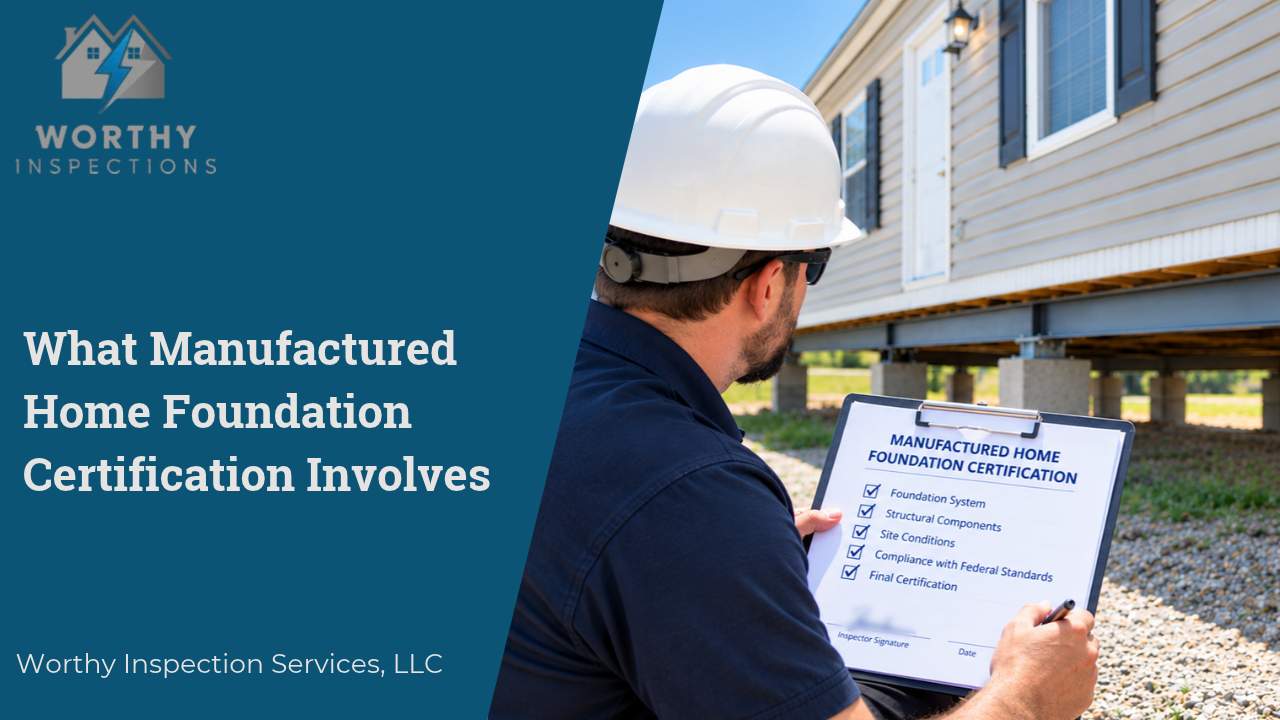
A manufactured home foundation certification is a letter from a licensed engineer stating that the home's foundation meets the criteria for a permanent foundation. The engineer measures the foundation against HUD's Permanent Foundations Guide for Manufactured Housing, often called the PFGMH or HUD-7584.
The letter speaks to how the home is supported and anchored. It is not a general condition report. A manufactured home foundation certification can apply to HUD and FHA foundations, VA foundations, conventional loan foundations, and modular homes.
Why Do Lenders Require It?
A lender wants proof that the home is permanently attached to the land and will hold up over time. FHA and VA loans generally require an engineer's certification showing the foundation meets HUD's guidelines and is structurally stable.
Without that proof, the lender may pause the loan. The certification is often one of the last documents needed before approval, so ordering it early can prevent a delay at closing. Requirements vary by lender and loan type, so ask the loan officer what they need.
What Does the Engineer Look At?
The engineer typically visits the property and examines the foundation in person, often through the crawl space access panel. The review may include:
- The type of foundation system, such as piers, a perimeter wall, or a slab
- How the home is anchored and connected to the foundation
- The condition of footings, piers, and other support points
- Backing for skirting or other enclosure materials
- Signs of settling, shifting, or damage
After the visit, the engineer states whether the foundation meets HUD's criteria for a permanent foundation.
How Is It Different From a Standard Home Inspection?
A standard home inspection looks at the visible, accessible condition of the roof, plumbing, electrical, heating, and other systems. A foundation certification asks a narrower question: does this foundation qualify as permanent under HUD guidelines?
Buyers often need both. The inspection reports on condition and maintenance needs, while the certification supports the loan. Cracks or settling noted during an inspection are among the red flags inspectors never ignore, and they may prompt a closer look from the engineer.
What If the Foundation Does Not Meet the Guide?
A certification reflects one specific property, so results differ from home to home. If the engineer finds the foundation does not meet the guide, the engineer may note what would need to change, such as added anchoring or support.
Those repairs or upgrades are usually completed and then reviewed again. Buyers and sellers can discuss who handles the work during negotiations, and raising the question early helps keep the sale moving.
The cost of any added work depends on the foundation type, its current condition, and the site, so a written estimate from a qualified contractor is a sensible next step.
How Can You Prepare Before the Visit?
A little preparation keeps the process smooth. Before the engineer arrives:
- Ask the lender which loan type and guidelines apply
- Gather any prior certification, plans, permits, or records of foundation work
- Make sure the crawl space access panel is clear and reachable
- Mention any additions, repairs, or past damage to the home
- Schedule early, since lenders often wait on this letter
In some FHA situations, a prior certification may be reused for a later loan if the foundation has not been altered or damaged. The lender makes that call, so confirm before assuming an older letter will work. Certification is quoted per property, as explained on the pricing page.
Get Your Foundation Certification Moving Early
A manufactured home foundation certification confirms that a foundation meets HUD's permanent foundation criteria, and many FHA and VA loans cannot close without one. Starting early, knowing what the engineer reviews, and preparing the property keeps the loan timeline on track and the sale moving.
At Worthy Inspection Services, foundation certifications are offered through a partnership with Foundation Certifications, serving Eureka, Whitefish, Kalispell, and the rest of Northwest Montana. Schedule an inspection or call 406-607-5424 to request a quote for your property.
Frequently Asked Questions
Why do lenders require a foundation certification?
Lenders want evidence that the home is permanently attached and structurally stable. FHA and VA loans generally require an engineer's letter confirming the foundation meets HUD's guidelines.
How is a manufactured home foundation inspected differently from a standard home?
A standard inspection reports on the condition of visible systems. A foundation certification is an engineer's review of whether the foundation, its anchoring, and its supports meet HUD's permanent foundation criteria.
How long does certification take?
Timing depends on the property, access to the crawl space, and the engineer's schedule. Call to ask about current timing, and order early because lenders often wait on the letter.
What is a foundation inspection for a mobile home?
It is the same type of review, since "mobile home" is the older term for a manufactured home. An engineer checks how the home is supported and anchored.
Do requirements differ by loan type?
They can. FHA, VA, and conventional loans may each have their own foundation requirements, so confirm with your lender before ordering.

Be the first to post a comment